 How-to
7 Steps to Choose the Right Mini Excavator Size
Last Updated: November 21, 2026
Quick Summary
To choose the right mini excavator size, start with the job: measure digging depth and trench width, check lift capacity, then confirm site access and transport limits. Mini excavator size is grouped by operating weight, from micro units under 2,000 lb to large compact machines of 10,000-16,000 lb.
- Operating weight includes the machine, fuel, and typically the operator, and it is the number to use for transport calculations.
- Micro machines handle shallow work under about 4 feet, mini class covers roughly 4 to 8 feet.
- Measure every gate and path against overall width, not track width.
- Lifting capacity drops fast as you extend the arm, so keep loads close to the machine.
- Attachments add weight and demand hydraulic flow, so check auxiliary hydraulics before you commit.
Table of Contents
- Start with the Job, Not the Machine
- Mini Excavator Sizes and Weights: Know the Classes
- Use a Mini Excavator Size Chart to Match Weight to Workload
- Mini Excavator Digging Depth by Size: How Deep Can You Go?
- Mini Excavator Lifting Capacity and Stability: What Can It Pick Up?
- Measure Site Access, Transport, and Ground Conditions
- Account for Attachments, Ground Pressure, and Rental Duration
- Reserve Your Mini Excavator with Hoke Rentals
- Frequently Asked Questions
Start with the Job, Not the Machine
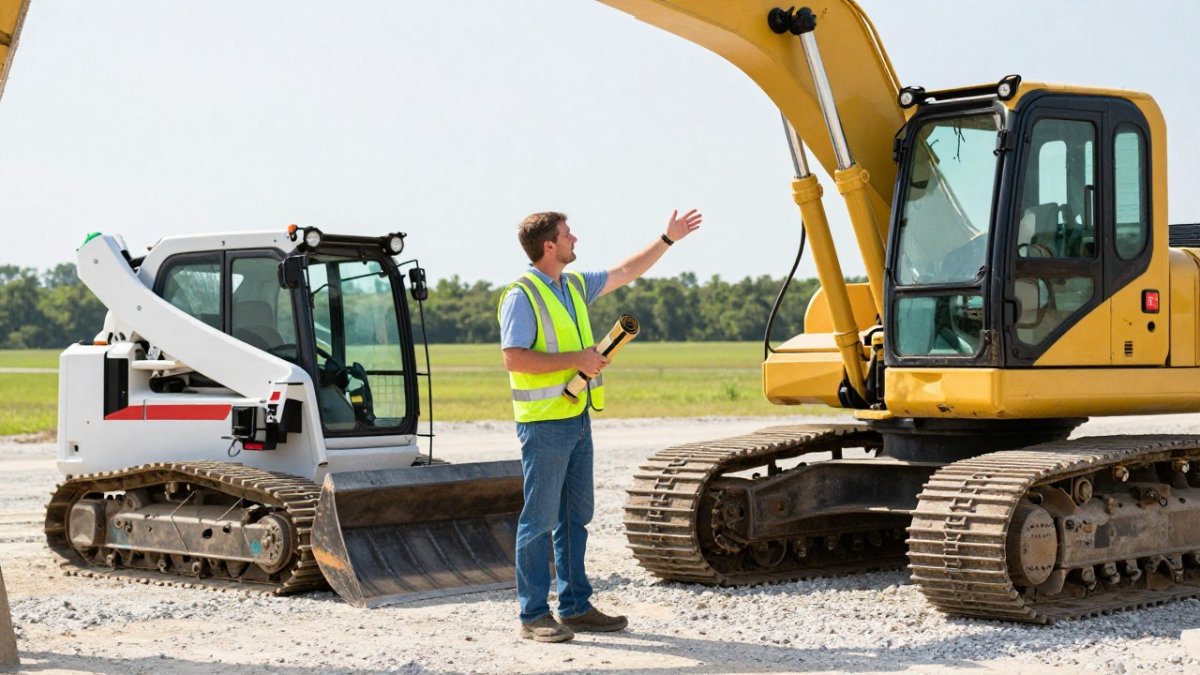
The right mini excavator size starts with the work, not the spec sheet. Before you look at a single machine, write down what you're digging, how deep, how wide, and where the machine has to fit. That list decides everything else.
A common pattern on rental counters is a customer asking for "the biggest one you've got," then discovering it won't fit through the side gate. Or they grab the smallest machine on the lot and spend two days chipping at a job a mid-size unit would finish in an afternoon. Getting the mini excavator size right saves you money, time, and a lot of frustration.
So here's the first question: what's the actual job?
- Trenching for utilities or drainage: depth and trench width drive the choice.
- Landscaping and bed prep: maneuverability and a clean finish matter more than raw power.
- Demolition and clearing: lifting capacity and reach move to the front.
- Tight backyard or fenced lot: access width is the hard limit.
If your job is drainage, our guide to mini excavator rental for backyard drainage walks through how the task itself narrows the size choice.
Digging depth is the number most people check first, and it's usually the one that rules out machines fastest. A compact excavator that can't reach the bottom of your trench is the wrong tool, no matter how well it fits the gate.
Mini Excavator Sizes and Weights: Know the Classes
Mini excavators are grouped by operating weight, and that single number tells you most of what you need to know. Operating weight includes the machine, fuel, and typically the operator, so it's heavier than the bare machine weight you might see listed.
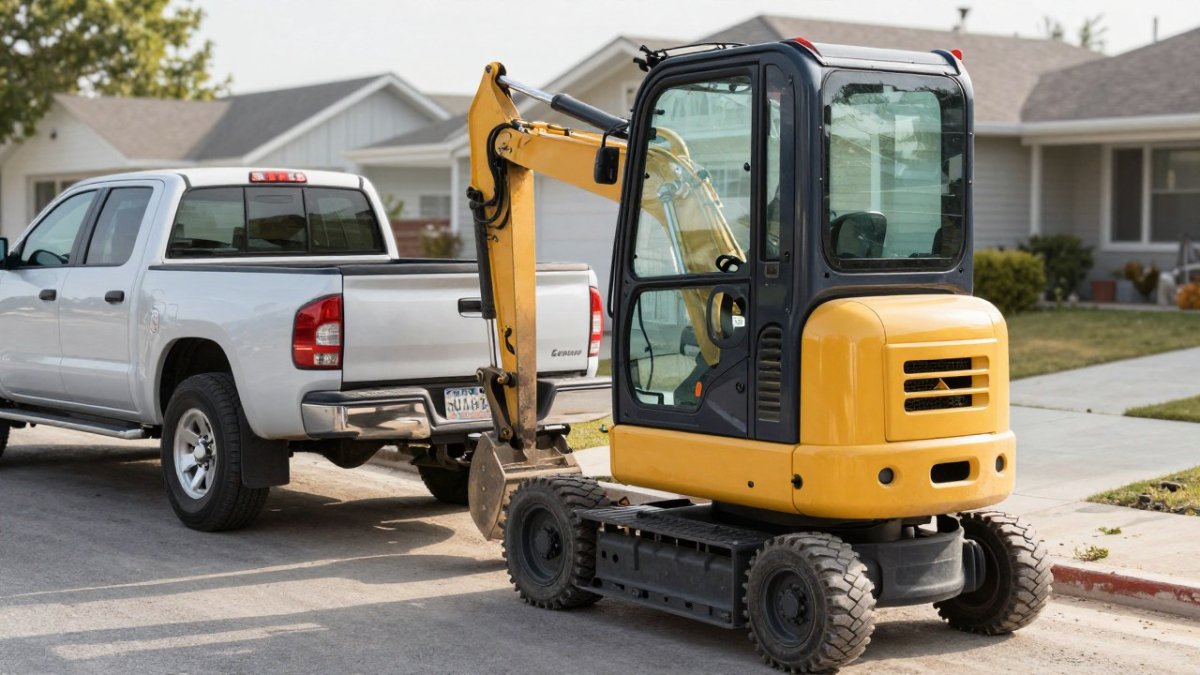
Here's how the classes break down in practice:
| Size Class | Operating Weight | Typical Digging Depth | Best For | Watch Out For |
|---|---|---|---|---|
| Micro | Under 2,000 lb | Shallow, under 4 ft | Tight yards, fence lines, indoor work | Very limited reach and lift |
| Mini | 2,000-6,000 lb | Roughly 4-8 ft | Landscaping, small trenches, residential | Needs a plan for transport |
| Mid-size | 6,000-10,000 lb | Roughly 8-12 ft | Utility work, deeper trenches, demolition | Wider footprint, heavier trailer |
| Large compact | 10,000-16,000 lb | 12 ft and beyond | Commercial site work, heavy lifting | Commercial transport and permits |
Machines within each class vary in configuration, so always confirm the spec sheet for the exact model you plan to rent.
Two machines in the same class can still differ in overall width, track width, and tail swing. A zero tail swing model keeps the back end inside the tracks as it rotates, which matters when you're working against a fence or a wall. A conventional tail swing machine reaches further back but needs clearance behind it.
Watch out: operating weight is not the same as transport weight. Add the bucket, any attachments, and the trailer tongue weight before you compare against your tow vehicle's rating. A machine that fits the class on paper can still push you over the limit once it's loaded.
Use a Mini Excavator Size Chart to Match Weight to Workload
A mini excavator size chart is a starting point, not a decision. Match the machine's weight class to your workload, then check access and transport against that class. The chart narrows the field; your jobsite makes the final call.
Work through it in this order:
- Measure digging depth and trench width. Add a few inches of margin for the bucket.
- Check lift capacity against the heaviest object you'll pick up.
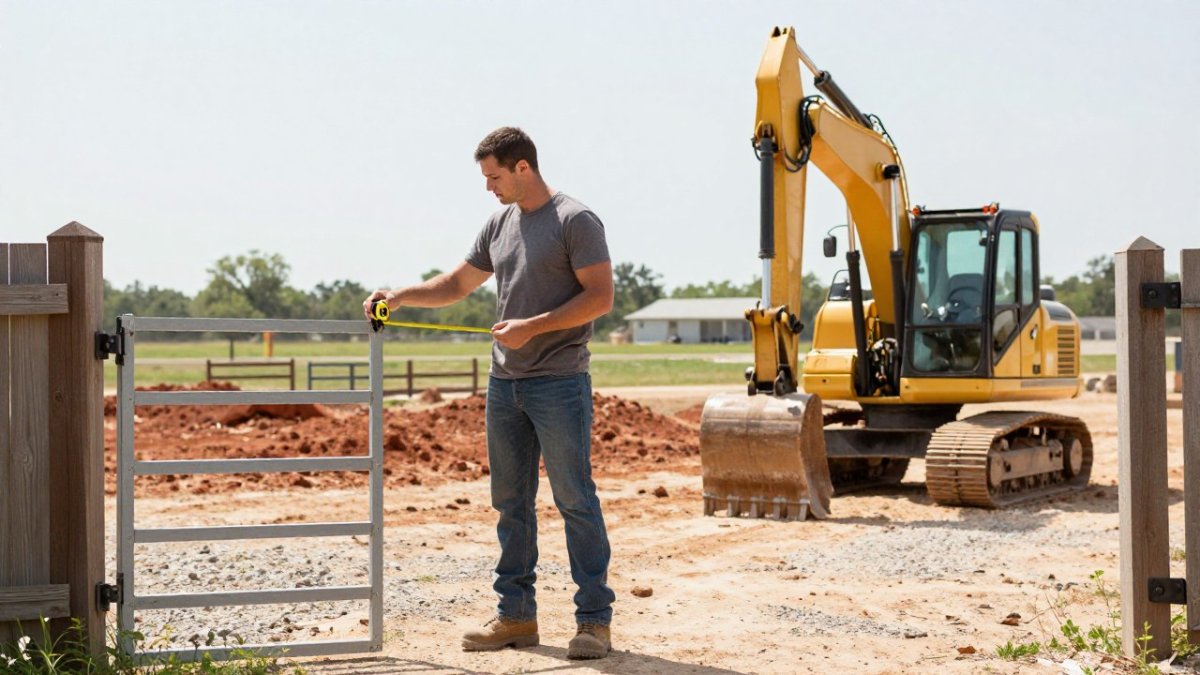
- Measure every gate, doorway, and path the machine must pass through. Compare to overall width, not track width.
- Weigh your transport setup. The machine plus trailer must stay within your tow vehicle's rating.
- Confirm ground conditions won't swallow a heavier machine.
Our resources page has reference charts and guides that help you match machine weight to the job before you call.
The size class you land on usually has a little room above and below. When two classes both work, pick the smaller one if access is tight, and the larger one if you need reach and lift capacity. That trade-off is the whole game.
Mini Excavator Digging Depth by Size: How Deep Can You Go?
Digging depth scales with size, but the published number is a maximum under ideal conditions. A mini excavator digging depth by size figure assumes a flat surface, the right bucket, and full extension. Real trenches run shallower.
As a rule of thumb, a micro machine handles shallow work under about 4 feet, a mini class covers roughly 4 to 8 feet, and mid-size and large compact machines push past 8 feet into the 12-foot range. Your bucket and boom configuration shift those numbers, so confirm the spec on the exact machine you're renting.
Depth isn't the only limit. Digging reach decides how far you can work from one position, which affects how often you reposition. On a long trench, a machine with more reach means fewer moves and a faster cycle time. If your trench runs longer than the machine's comfortable reach, you'll spend the day tracking back and forth.
Soil conditions change the math too. Loose sandy soil digs fast but collapses. Heavy clay slows you down and stresses the machine. Rocky ground may call for a hydraulic breaker and a heavier class to carry it.
Mini Excavator Lifting Capacity and Stability: What Can It Pick Up?
Mini excavator lifting capacity drops fast as you extend the arm. The rated capacity at the bucket is one number; the capacity with the arm stretched out and the load swinging is much lower. That gap is where machines tip.
Stability comes down to three things: the machine's weight, how far the load is from the center, and the ground under the tracks. A heavier machine with a wider track stance holds steadier. Lifting over the side is less stable than lifting over the front or back.
A few habits keep you safe:
- Keep the load close to the machine, not at full reach.
- Lift over the idlers or the sprocket, not the side.
- Set the dozer blade down to add a stabilizing anchor when you can.
- Never lift a load you can't stop smoothly.
If you're regularly picking up heavy objects, size up. A machine that's borderline on lift capacity will feel unstable all day, and that slows every cycle.
Measure Site Access, Transport, and Ground Conditions
Access and transport eliminate more machines than any other factor. Measure before you commit, because a machine that won't fit through the gate is a machine that goes back on the trailer. This is also where most buyers and renters get surprised: the machine fits the job, but the trailer and tow vehicle can't legally carry it.
Start with the jobsite itself. Run this checklist before you look at a machine:
- Measure the narrowest gate, doorway, or path. Compare to overall width, not track width.
- Check ground clearance for thresholds and curbs.
- Measure overhead clearance for low branches, wires, and carports.
- Note tail swing clearance behind the machine as it rotates.
- Measure the working area on both sides of the trench or dig zone.
- Look at the ground: soft turf, gravel, or a finished driveway all react differently to ground pressure.
Then do the transport math, which is where the real constraints live. A trailer has a gross vehicle weight rating (GVWR) and a payload capacity. The payload capacity is the GVWR minus the trailer's own weight. Your machine plus bucket plus any attachment must stay under that payload number.
Confirm the actual numbers on the trailer's certification label and the tow vehicle's door jamb sticker rather than relying on a sales listing.
Watch out: towing requirements such as trailer brakes and licensing depend on weight and location. Check the applicable motor vehicle rules before you tow. A machine that's legal to operate can still be illegal to haul on the setup you have.
That last jobsite point matters more than most people expect. A heavier machine concentrates weight on its tracks. On soft ground or a delicate surface, a lighter machine with wider tracks spreads the load and does less damage.
Account for Attachments, Ground Pressure, and Rental Duration
Attachments change the size you need. An auger for post holes, a hydraulic breaker for rock, a grapple for brush, or a trencher head all add weight and demand hydraulic flow. A machine that's barely big enough for the bucket may not run the attachment you need.
Check auxiliary hydraulics on the machine you're considering. Not every compact excavator is plumbed for every attachment, and the flow rate has to match the tool.
Then think about rental duration and total cost. A larger machine may finish the job faster, which can offset a higher daily rate. A smaller machine may take longer but costs less per day and fits where the big one can't. Weigh the full picture, not just the daily number. Pricing depends on the machine, the dates, and delivery, so contact us or visit our website for current prices or a quote.
If you have questions about attachments, rental terms, or logistics, our FAQ page covers the practical details customers ask about most.
Reserve Your Mini Excavator with Hoke Rentals
Picking the right mini excavator size comes down to matching the machine to the job, the access, and the transport, in that order. Get those three right and the rental goes smoothly.
When you're ready, browse our equipment rentals to see the mini excavators available, or contact us with your job details and we'll help you confirm the right machine and availability.
Sizing a mini excavator wrong costs you a day of work and a second trip to the rental yard. Hoke Rentals helps you avoid that with well-maintained machines, straightforward rentals, and personal service for contractors, property owners, and DIY customers. Tell us the job, the access, and the timeline, and we'll point you to the right machine. Get started with Hoke Rentals and reserve the excavator that fits your job the first time.
Frequently Asked Questions
What size mini excavator should I get for a typical landscaping project?
For most residential landscaping jobs like planting beds, small retaining walls, and light trenching, a 1- to 2-ton mini excavator is a practical starting point. These machines fit through standard gates, are easy to transport, and offer enough digging depth for shallow work. If you need to move heavier materials or dig deeper, step up to a 3- to 4-ton class. Always match the machine to the tightest access point and the deepest dig on your project.
What size mini excavator do I need to lift 2,000 pounds?
Lifting capacity depends on the machine's operating weight and the load's distance from the machine. Capacity drops quickly as you extend the arm. Check the manufacturer's lift chart for the specific model and keep the load close, and account for ground conditions and stability.
How deep can a 1.5-ton mini excavator dig?
The maximum digging depth of a mini excavator depends on the model and bucket, so confirm it on the spec sheet. If your project requires deeper excavation, such as for a basement or deep utility line, you will need a larger size class. Always confirm the digging depth by size on the spec sheet before renting.
Can a mini excavator fit through a narrow gate?
Zero-tail-swing models are especially helpful in confined spaces because the house doesn't overhang the tracks. Measure your gate opening and compare it to the machine's overall width, not just the track width. If access is tight, a smaller machine or a walk-behind model may be the better choice.