 How-to
Where to Rent a Plate Compactor for a Small Patio Project
Last Updated: November 4, 2026
Quick Summary
To find where to rent a plate compactor for a small patio project, start with local construction equipment yards or rental shops that stock compactors and can explain model differences. Ask about availability, plate size, delivery, and the total cost including fees before you book.
- A 14-inch plate suits small patios, walkways, and corners where control matters more than coverage.
- A 20-inch plate covers more ground and packs deeper, but it is heavier and harder to steer.
- Compact the base in thin lifts of about 2 to 3 inches, lightly wetted, with overlapping passes.
- Compare the full written total, including damage waiver, fuel, delivery, and cleaning fees, not just the daily rate.
- Clean the machine and return it on time with a receipt to avoid extra charges.
Table of Contents
- Choosing the Right Compactor for a Small Patio
- Where to Find a Plate Compactor Rental Near Me
- 14 in Vibratory Plate Compactor Rental: When It Fits a Patio
- 20 in Vibratory Plate Compactor Rental and When the Larger Plate Makes Sense
- Renting From Home Depot and Other Retail Options
- Preparing the Base, Operating Safely and Budgeting the Full Rental Cost
- Booking Your Compactor and Returning It Without Surprise Charges
- Frequently Asked Questions
Choosing the Right Compactor for a Small Patio
A patio base that settles, dips, or heaves usually comes down to one step: compacting the gravel and sand properly before the pavers go down, so if you are looking into where to rent a plate compactor for a small patio project, start there. Renting a plate compactor is the most practical way to do that job without buying equipment you will use once. For a broader look at choosing equipment for yard drainage, see mini excavator rental for backyard drainage. This guide walks through how to choose the right machine, where to rent one, what factors affect cost, and how to return it cleanly.
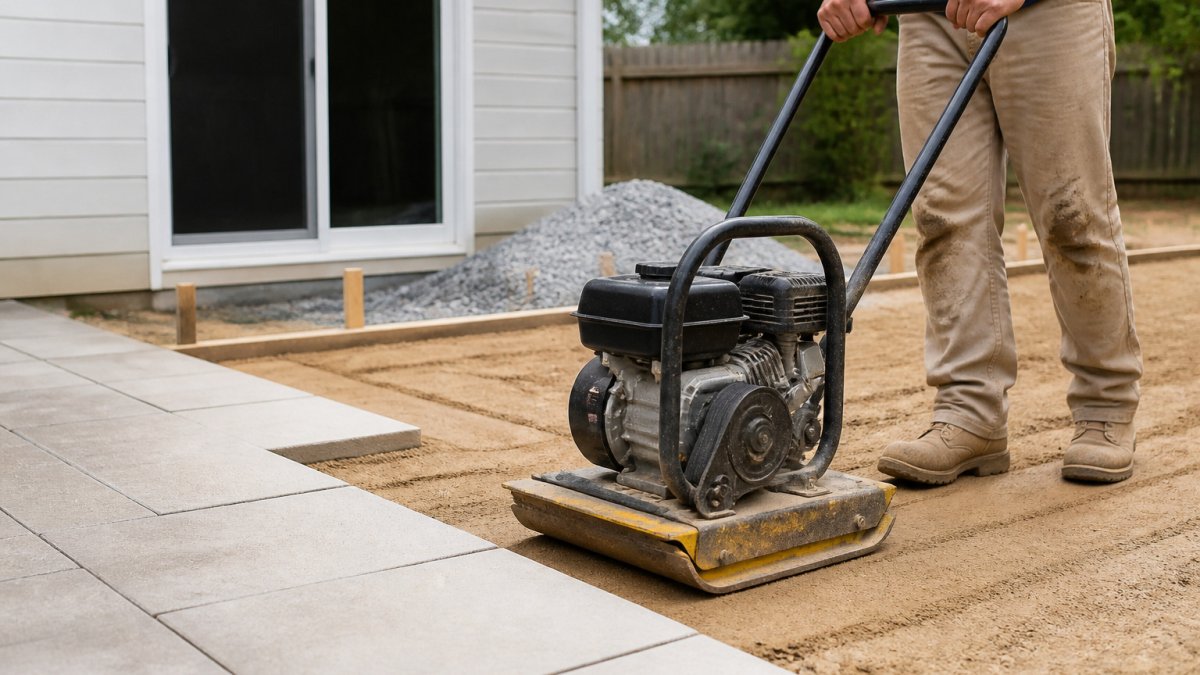
A plate compactor is a vibrating steel plate that packs soil, sand, and gravel into a dense, stable layer. For a small patio, the right size and type make the difference between a level surface and a yard you will redo next spring.
Forward-Plate Versus Reversible Plate Compactors
When you are deciding where to rent a plate compactor for a small patio project, most rental fleets offer two main styles. Forward-plate machines only move ahead, which keeps them simple and predictable for flat work. Reversible models can also move backward, which helps when you are working in tight corners or close to a wall.
- Forward-plate: Easier to control, usually lighter, and well suited to open areas.
- Reversible: Better for edges and tight spaces, often a bit heavier and harder to handle.
For a typical backyard patio with open ground, a forward-plate machine is usually enough. If your layout has a lot of corners, narrow side yards, or tight spots near a fence, ask about a reversible model when you call.
Where to Find a Plate Compactor Rental Near Me
Searching for "plate compactor rental near me" will bring up local equipment yards, rental shops, and general tool rental counters. Start with businesses that carry construction and jobsite equipment, since they tend to keep compactors in stock and can explain the differences between models.
When you call or visit, ask these questions:
- Is the compactor available on the dates I need?
- Is the machine a forward-plate or reversible model?
- What is the plate size and approximate weight?
- Do you offer delivery or pickup?
Contact Hoke Rentals to check availability for your project dates.
14 in Vibratory Plate Compactor Rental: When It Fits a Patio
A 14-inch plate is a common choice for small jobs. It is lighter and easier to maneuver, so it fits well on patios, walkways, and pathways where you need control more than raw coverage.
- The patio area is small, roughly a few hundred square feet or less.
- You need to get into corners and along borders.
- You are compacting a shallow base for pavers or flagstone.
- You or a helper will be operating the machine for most of the day.
Keep in mind that a smaller plate covers less ground per pass. For a small patio, that trade-off is usually worth it, but plan for more passes to get the same result.
20 in Vibratory Plate Compactor Rental and When the Larger Plate Makes Sense
A 20-inch plate covers more ground in each pass and packs deeper. It is heavier, which helps on thicker base layers, but it also takes more effort to steer.
Consider a 20-inch machine when:
- The patio is larger, or you are doing a driveway section or longer walkway alongside the patio.
- You are working with thick gravel layers that need more compaction force.
- You have the physical capacity and a second person to help with transport and loading.
A 14-inch machine can handle a small patio comfortably, while a 20-inch model can save time on bigger jobs. Ask the rental counter which size matches your base depth and total area.
Renting From Home Depot and Other Retail Options
Retail home-improvement chains, independent equipment yards, and online rental marketplaces all rent plate compactors, but they differ in ways that matter for a small patio project. You can also compare equipment rentals offered directly by this business as an alternative to retail chains.
Retail rental counters (home-improvement chains). Large chains with tool-rental departments can be convenient because of store hours and multiple locations. Inventory at a given store may be limited on weekends.
Independent equipment yards. Construction-focused rental yards may offer more compactor sizes and can explain forward versus reversible operation. Ask whether delivery, fuel, and damage waiver are bundled into a single quote, which makes the total easier to compare.
Online booking and marketplaces. Online rental platforms may let you reserve a machine by date, but pickup, transport, and return logistics can be your responsibility; confirm with each provider.
When you compare options, build a short checklist and ask every provider the same questions:
- What is the total out-the-door cost, including tax, damage waiver, fuel, delivery, and cleaning fees?
- What is the minimum rental period, and does a weekend rate apply?
- Is the machine gas or electric, and is fuel included or returned full?
- What accessories come with it, water tank, wheel kit, lifting handles, operator manual?
- What is the late-return policy and the deposit amount?
- Can I inspect the machine before I sign, and how is pre-existing damage documented?
Compare the written total rather than the headline daily number, since add-on fees can change the final cost. Visit the Hoke Rentals website to see current equipment availability, or contact the company for a quote tailored to your project.
Preparing the Base, Operating Safely and Budgeting the Full Rental Cost
A compactor only works as well as the base beneath it, and the base only works if you compact in the right sequence. This section covers the patio-specific operating steps, the safety habits that keep a walk-behind machine controllable, and the full cost picture beyond the daily rate.
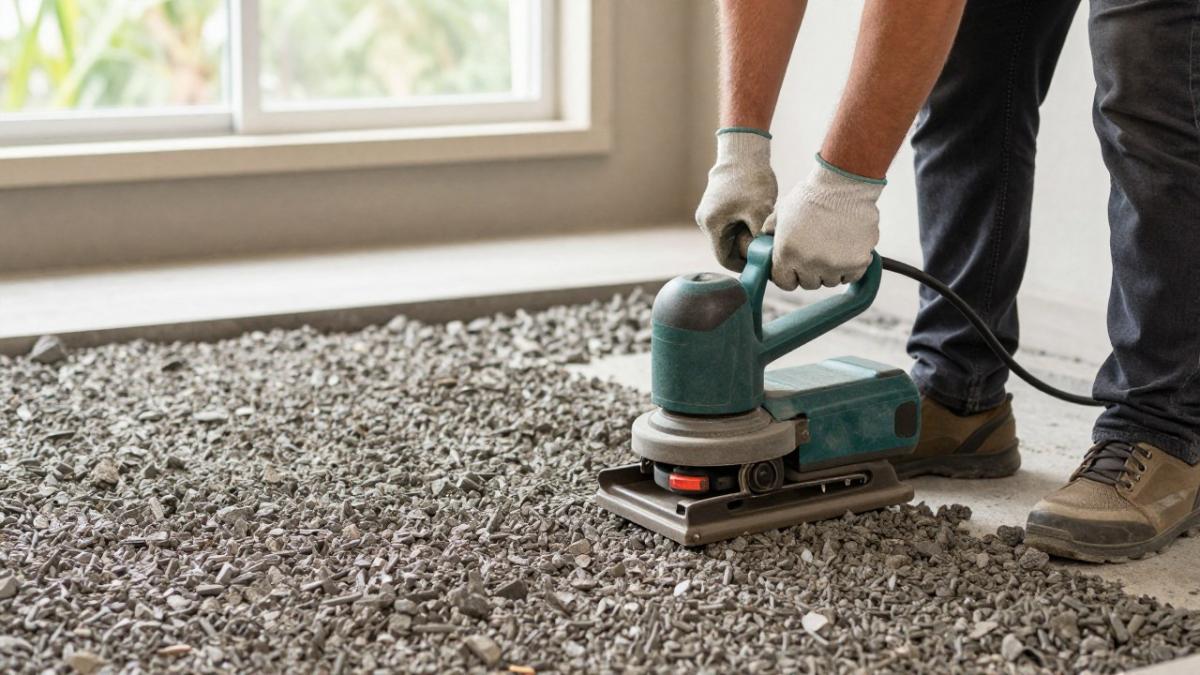
Prepare and compact the base in thin lifts.
- Mark the patio area and remove sod, roots, and loose topsoil. Strip any organic material, because it will decompose and settle under the pavers.
- , typically including a compacted gravel base and a bedding sand layer.
- Spread gravel in thin layers, about 2 to 3 inches at a time. Thick lifts trap loose material at the bottom that the plate cannot reach.
- Lightly wet each layer before compacting. Dry gravel does not pack as well, and a light mist also keeps dust down.
- Make overlapping passes. Run the plate over the surface in one direction, then repeat at right angles to the first pass, overlapping each pass by about half the plate width so no strip is missed.
- Compact until the surface feels firm and shows no footprints. A common pattern is two to four passes per lift depending on material and moisture.
Protect finished surfaces and edges. Once pavers or flagstone are set, do not run a plate compactor directly on the finished surface unless the paver manufacturer specifically allows it, vibration can chip edges, loosen joints, and shift the bedding sand.
Operate safely.
- Wear hearing protection, gloves, closed-toe boots, and eye protection.
- Keep hands and feet clear of the plate at all times, and never lift or carry a running machine.
- Never operate the machine on a slope you cannot stand on safely; compact slopes by working across the face, not straight up and down.
- Read the operator manual the rental shop provides before you start, and ask the counter to demonstrate the throttle and vibration controls.
- Keep bystanders, children, and pets well away from the work area, and be aware of the machine's pull direction so it does not walk into you.
Budget the full cost. The daily rate is only part of what you will spend. Build a written estimate that includes:
- The base rental rate for the number of days you actually need, plus any minimum-period charge.
- A refundable deposit, which is common on gas-powered equipment.
- A damage waiver, which is optional at many counters but can add a percentage of the rental rate.
- Fuel, if the machine is gas-powered and returned without a full tank.
- Delivery and pickup fees if the yard is far from your home or the machine is too heavy to load yourself.
- Cleaning fees if the machine is returned caked with mud or gravel.
- Late-return charges, which are often billed at the daily rate or a fraction of it per hour.
Watch out: renting a machine for too few days can force a rushed job, and a rushed base can contribute to settling. Estimate your full work time, including digging, hauling gravel, and multiple passes per lift, before choosing the rental length, and ask whether a weekly rate costs less than four or five daily rates.
The table below summarises the base-preparation steps, with the thickness and pass guidance the article gives for each.
| Step | What to do | Time or frequency |
|---|---|---|
| Spread gravel | Add material in thin layers | About 2 to 3 inches per layer |
| Wet the layer | Lightly mist before compacting | Before each lift |
| Compact | Overlapping passes, then right-angle passes | Two to four passes per lift |
| Firmness check | Surface feels firm, no footprints | Until firm |
| Final seating | Hand tamper or rubber mallet at borders | Not on finished pavers |
Booking Your Compactor and Returning It Without Surprise Charges
Booking early is generally advisable for project dates. If you are in the area, check whether this business serves your location on the Lufkin, TX service page. Give the rental counter your project dates, the machine size you need, and whether you need delivery.
Before you pick up the compactor:
- Inspect the plate, engine, and controls for visible damage.
- Confirm the fuel level for gas models and note it on your paperwork.
- Ask how the machine should be cleaned before return.
When you return it:
- Clean off dirt and gravel, especially around the plate and underside.
- Return it on the agreed date and time to avoid extra daily charges.
- Get a receipt that confirms the machine was returned in good condition.
To check availability and book your plate compactor, contact Hoke Rentals today. Contact Hoke Rentals to confirm machine size, rental terms, and delivery options for your small patio project.
Frequently Asked Questions
How much does it cost to rent a plate compactor?
Plate compactor rental pricing depends on the machine size, rental length, delivery distance and the location you rent from, so there is no single fixed figure to quote here. Rental providers typically set a daily rate, with weekly and monthly rates that lower the per-day cost for longer jobs. Budget for delivery or pickup, fuel or charging, transport to your site, and any damage waiver or deposit. For an accurate figure, request a written quote for your exact dates and machine size from the provider you choose, including Hoke Rentals, whose team can confirm current pricing and availability.
What size plate compactor is best for a small patio?
For most small patios, a compactor in the 14 in plate range is a practical choice because its narrower footprint maneuvers easily around edges, borders and existing structures. A 20 in plate covers ground faster and suits larger open areas, but it can be harder to control in tight spaces. Match the machine to the job: confirm the plate width, machine weight and engine power, and make sure the compactor can be transported to your site with the vehicle you have available.
Do I need a plate compactor to prepare a patio base?
For a patio base of compacted gravel or aggregate, a plate compactor is the most reliable tool for achieving a firm, level surface, because it compacts material in thin layers. A hand tamper can work on very small areas, but it produces less consistent compaction and takes much longer. Compacting in lifts of roughly 2 to 3 inches, and checking that the surface stays level after each pass, gives a base that resists settling under pavers.