 How-to
Mini Excavator Rental for Backyard Drainage: How to Choose
Table of Contents
- Start With the Trench: Drainage Project Scope and Site Prep
- Mini Excavator Size for Landscaping: Match Weight Class to the Job
- Mini Excavator Width and Gate Access: Measure Before You Reserve
- Mini Excavator vs Trencher for French Drain: Which Machine Fits
- How Long to Rent a Mini Excavator for a Backyard Drainage Job
- Before the Machine Arrives: Utilities, Hazards, and Property Protection
- Rental Day Planning: Delivery, Fuel, Insurance, and Total Cost
- Conclusion
- Frequently Asked Questions
Last Updated: October 21, 2026
Start With the Trench: Drainage Project Scope and Site Prep
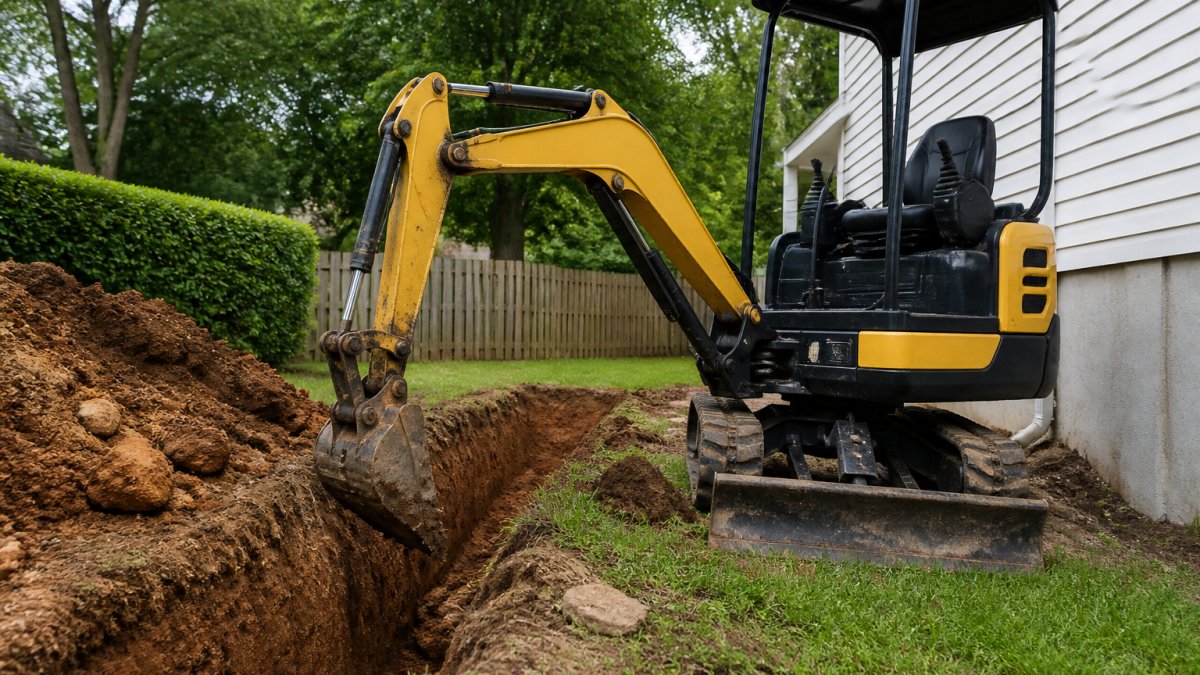
The right mini excavator rental for backyard drainage starts with the trench, not the machine. Measure the run, depth, and width first, then size the excavator to fit.
Three numbers matter: depth, width, and total run. Get them wrong and you either rent too small a machine or pay for capacity you never use.
Measure Trench Depth, Width, and Total Run
Walk the route with a tape measure and string line. Note four things:
- Total run: the full length from the high point to the discharge point
- Trench depth: how far down the pipe sits, plus bedding
- Trench width: usually the pipe diameter plus several inches of gravel on each side
Add pipe bedding depth to your trench depth, a shallow-looking trench gets deeper once gravel goes in.
Mini Excavator Size for Landscaping: Match Weight Class to the Job
Mini excavator size for landscaping comes down to operating weight, total mass with fuel and a standard bucket, which sets what it can dig without tipping. Most backyard drainage jobs land in the 1- to 2-ton class.
Here is how the classes break down for drainage work:
Weight Class | Best For | Trade-off |
|---|---|---|
Under 1 ton | Tight gates, light grading | Shallow digging depth |
1- to 2-ton | Most backyard drainage runs | Limited reach |
3- to 5-ton | Long runs, deeper trenches | Hard to fit through gates |
A compact excavator in the 1- to 2-ton range handles most residential drainage. Step up only when the trench is long or deep.
Digging Depth and Reach: What the Spec Sheet Actually Means
Digging depth is how far below grade the bucket reaches; digging reach is how far out it extends. Both shrink once you account for bucket angle and spoil pile.
Leave a margin: rent a machine rated a bit deeper than your trench needs, so you have room to work instead of maxing out every scoop.
Mini Excavator Width and Gate Access: Measure Before You Reserve
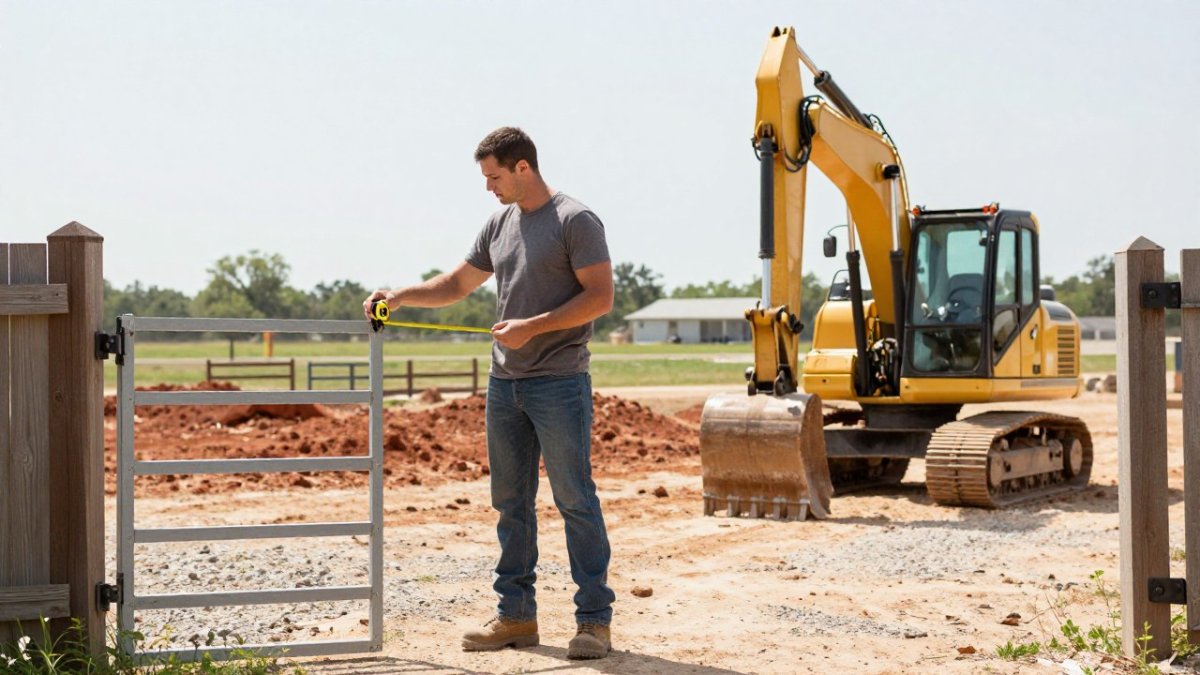
Mini excavator width and gate access decide whether the machine reaches the backyard at all.
Measure the gate opening, then subtract a few inches for clearance on each side. Check the same for any path, fence corner, or low branch.
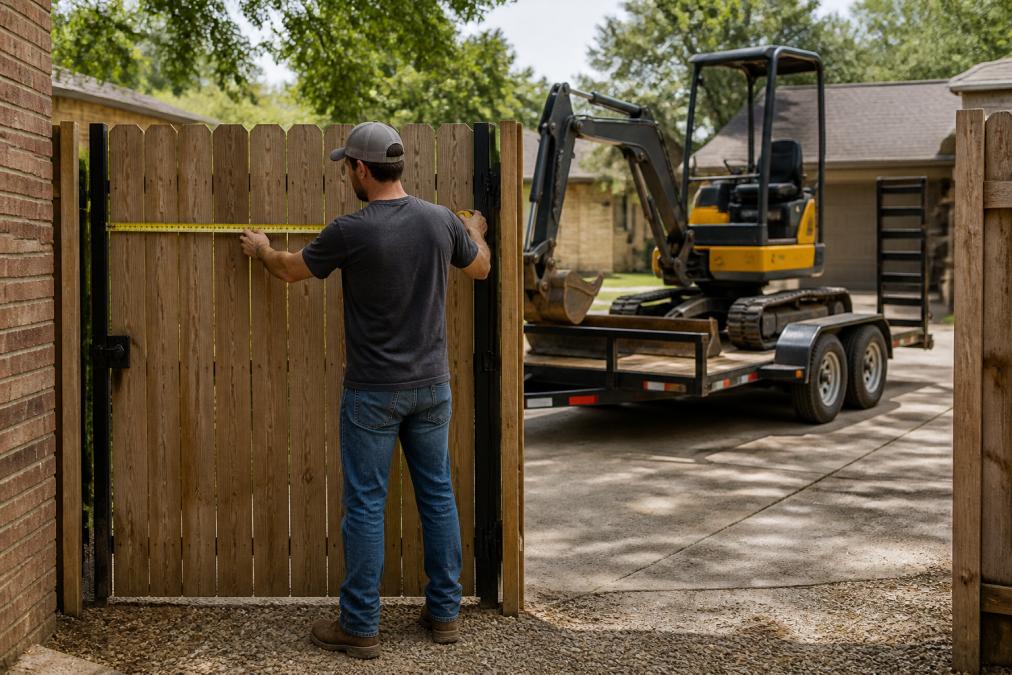
A person measuring the width of a residential side gate with a tape measure while a compact mini excavator waits on a trailer in the driveway behind them
Plan the Route: Backyard Access, Ground Protection, and Spoil Storage
The path in matters as much as the gate width.
- Ground protection: lay plywood or mats on lawns and paving before tracks roll over them
- Spoil storage: decide where dug soil goes before the first scoop
- Clearance: check overhead lines, low branches, and fence posts
Spoil piles add up fast. A long trench produces more dirt than expected, so stage the pile out of the trench and off the lawn.
Mini Excavator vs Trencher for French Drain: Which Machine Fits
The mini excavator vs trencher for French drain question has a clear answer for most backyard jobs. A trencher cuts a narrow, clean trench fast. A mini excavator digs wider, handles gravel and spoil, and works in tighter spots with attachments.
Factor | Mini Excavator | Trencher |
|---|---|---|
Trench width | Adjustable with buckets | Fixed, narrow |
Spoil handling | Digs and moves dirt | Leaves it in place |
Tight access | Fits with compact models | Needs a straight run |
Best for | French drains, grading, gravel | Long straight pipe runs |
For a French drain that needs gravel, filter fabric, and grading, the excavator does more of the job with one machine. A trencher wins only on long, straight, narrow runs where speed is everything.
French Drain Installation Workflow: Bucket, Grade, and Gravel
A French drain installation workflow runs in a set order:
- Mark the trench line and confirm the slope
- Dig the trench to depth with a narrow bucket
- Line the trench with filter fabric
- Add a gravel bed, then set the pipe
- Cover with more gravel and wrap the fabric
- Backfill and grade the surface
Grade accuracy decides whether the drain works, water must flow downhill the whole way. Check slope as you dig, not after.
How Long to Rent a Mini Excavator for a Backyard Drainage Job
How long to rent a mini excavator depends on run length, soil, and access. A short backyard run is often a one-day job. Longer runs, tough soil, or slow access push it to two or three days.
Plan the rental period around the whole job, not just digging:
- Site prep and marking
- Digging and spoil handling
- Gravel, pipe, and fabric
Most people underestimate the non-digging steps. Build in a buffer day if soil is rocky or access is tight.
Before the Machine Arrives: Utilities, Hazards, and Property Protection
Call 811 before you dig. The national call-before-you-dig line marks public underground utilities at no cost and prevents the worst accidents. Never assume a backyard has no buried lines.
But 811 only covers public utilities up to the meter. The lines most likely to stop your machine are private: irrigation laterals, septic lines and drain fields, downspout and sump discharge lines, landscape lighting cable, gas grill or pool supply lines, and old clay or Orangeburg sewer laterals. 811 will not mark these, and hitting one can mean a flooded trench, a repair bill, or a gas leak.
A Pre-Dig Locating Workflow for Backyard Drainage
Work through this sequence before the rental machine arrives:
- Submit the 811 request at least two to three business days before digging, the standard window most states require, and wait for the marks to be completed and the ticket to be closed.
- Pull the property survey or plat and any septic permit or as-built drawings. These show the septic tank, drain field, and sometimes the sewer lateral.
- Walk the trench route and mark private lines yourself. Trace sprinkler heads back to their valves, find the septic tank lids, and note where downspouts discharge.
- Use a private locating service if the route crosses a septic field, a pool line, or an area with unknown buried infrastructure. Many utility locators offer private locating for a fee, and it is cheaper than a repair.
- Hand-dig test holes every 10 to 15 feet along the trench line where marks are unclear. A post-hole digger or sharpshooter shovel confirms depth and soil before the excavator commits.
- Flag and photograph everything, the 811 marks, your private marks, and the test holes, so the operator has a visual reference and you have a record.
Drainage-Specific Hazards to Plan Around
Beyond buried lines, a drainage trench crosses things a generic checklist misses:
- Foundations and footings: keep the trench at least a few feet off the foundation unless the drainage plan calls for a footing drain, and never undercut a footing.
- Septic drain fields: a trench through a leach field can destroy it. Route around it or plan a different discharge point.
- Retaining walls and fence posts: saturated soil around a wall footing can shift it. Check the wall's drainage before you add water to the area.
Protecting Lawns, Paving, and Landscaping
Track type and ground pressure decide how much lawn you repair afterward. Steel tracks grip better on slopes and in mud but mark paving and tear turf; rubber tracks are gentler on finished surfaces and driveways. Either way:
- Lay plywood or ground-protection mats on lawns, driveways, and paver paths before tracks roll over them.
- Keep the spoil pile on tarps, not on finished lawn, and stage it where the machine can reach it without tracking over the trench.
- Mark sprinkler heads, valve boxes, and landscape lighting fixtures with flags so they are visible from the operator's seat.
Rental Day Planning: Delivery, Fuel, Insurance, and Total Cost
Rental day planning keeps the job on schedule. Confirm delivery time, drop-off spot, and pickup before the machine arrives. Ask how fuel is handled and whether insurance is included or extra.
The advertised daily rate is not the total cost. A backyard drainage rental is built from several line items, and the ones competitors skip usually blow the budget.
What Goes Into the Total Cost
Most rental agreements price these separately or as add-ons:
- Rental period: daily, weekly, and weekend rates. A weekly rate is often cheaper than three or four daily rates, so price the whole job before you book by the day.
- Delivery and pickup: charged by round trip and by distance. A machine that has to be trailered across town costs more to deliver than one picked up at the yard.
- Fuel: some rentals come full and must be returned full; others charge a refueling fee. Ask which policy applies before you sign.
Planning the Rental Days Realistically
A one-day rental rarely covers a full drainage job. Digging is only part of the work:
- Site prep, marking, and 811 wait time
- Digging and spoil handling
- Gravel, filter fabric, and pipe placement
A short backyard run is often a one-day dig plus a second day for gravel, pipe, and backfill. Rocky soil, tight access, or a long run pushes it to two or three days. Build in a buffer day rather than paying a second delivery fee because the machine went back too early.
Rental Day Checklist
- Confirm delivery window and drop location
- Clear the route and gate
- Stage plywood and mats
Book the delivery for the morning. A full day of daylight on the machine beats a half day every time, and ask whether a weekly rate beats your planned daily total before you reserve.
For current rates, delivery charges, and waiver terms, check with Hoke Rentals directly. Rates change with machine class, rental length, and delivery distance, so a quick call with your trench measurements and access details gets you an accurate total instead of a guess.
Conclusion
Choosing a mini excavator rental for backyard drainage comes down to measuring first and matching the machine to the trench. Get depth, width, and access right, and the rest falls into place.
Hoke Rentals supplies well-maintained equipment for contractors, landowners, and DIY customers, with dependable machines, straightforward rentals, and personal service.
Contact Hoke Rentals to reserve the right machine for your backyard drainage job.
Frequently Asked Questions
What size mini excavator do I need for a backyard French drain?
For most residential French drains, a 1- to 2-ton mini excavator is the right starting point. It digs trenches roughly 6 to 9 feet deep depending on the model, fits through gates around 36 to 48 inches wide, and keeps ground pressure low enough to limit lawn damage. A 3- to 5-ton machine only makes sense when the trench run is long, the soil is heavy clay, or you need more digging depth and reach than a compact unit provides.
Can a mini excavator fit through a standard backyard gate?
Some can, but you have to measure. Standard walk gates are often 36 inches wide, and many 1- to 2-ton mini excavators have track widths around 39 to 49 inches, so they will not pass. Look for a model with a retractable or adjustable track frame, or plan to remove a fence panel. Measure the narrowest point of the route, including gate posts, downspouts, and AC units, and confirm the machine's width with the rental provider before reserving.
Is a trencher or a mini excavator better for a French drain?
A trencher cuts a narrow, consistent trench fast in open lawns with clean soil, but it struggles in tight corners, rocky ground, and areas with roots. A mini excavator handles curves, depth changes, and spoil removal, and it can lift and place gravel or pipe. For a French drain that turns corners, follows a slope, or sits in a confined backyard, the mini excavator is usually the more flexible choice. For a long, straight run across an open field, a trencher can be faster.
How long should I rent a mini excavator for drainage work?
Plan on a one-day rental for a short run under about 100 feet in easy soil, and two to three days for longer runs, rocky ground, or a full French drain with gravel and pipe. Add a day if you are learning the machine or working alone. Weekend rentals often bill as one day, which suits homeowner projects. Confirm delivery and pickup times with the rental provider so transport does not eat into your digging hours.