 How-to
7 Construction Equipment Rental Costs You Need to Know
Last Updated: October 24, 2026
Quick Summary
Construction equipment rental costs depend on equipment type, rental duration, local market conditions, and additional fees like delivery and damage waivers. A mini excavator costs $250-$450 per day, while standard excavators range $450-$850 daily, and weekly rates typically offer 15-25% savings compared to daily rates.
- Mini excavators rent for $250-$450 daily, standard excavators $450-$850 daily, and large excavators $850-$1,800+ daily.
- Weekly rental rates typically cost 15-25% less per day than daily rates, and monthly rates save 25-35% per day.
- Delivery fees range $75-$400 each way depending on distance and machine size, often waived on multi-week contracts.
- Damage waivers add 5-15% to base rental cost but protect against unexpected repair liability.
- Secondary fees including fuel charges, cleaning, operator training, and late returns can add 20-40% to your base rental cost.
Table of Contents
- Understanding Construction Equipment Rental Costs
- How to Calculate Equipment Rental Costs for Your Project
- Excavator Rental Cost Per Day and Weekly Options
- Daily vs. Weekly Equipment Rental Rates: Which Saves Money
- Other Heavy Equipment Rental Pricing: Skid Steers, Lifts, and Loaders
- Hidden Costs and Fees Beyond the Base Rental Rate
- Using an Equipment Rental Cost Calculator to Budget Accurately
- Getting a Quote and Booking Your Equipment
- Frequently Asked Questions
Understanding Construction Equipment Rental Costs
Construction equipment rental costs depend on several factors beyond the base daily rate. When budgeting for a project, you need to understand what drives those costs and how they vary across machines and rental periods.
The price reflects equipment type, rental duration, local market conditions, and additional fees. A mini excavator costs less per day than a large excavator, and a one-day rental has a higher daily rate than a weekly rental. Delivery fees, fuel charges, and damage waivers add up quickly.
At Hoke Rentals, we help contractors and property owners navigate these costs. Understanding the pricing structure means no surprises at checkout.
How to Calculate Equipment Rental Costs for Your Project
Start by identifying three things: the equipment type, your project duration, and whether you need delivery.
Step 1: Identify Your Equipment Needs
List the specific machines your project requires. Moving dirt? An excavator. Loading materials? A skid steer or loader. Working at height? A boom lift or scissor lift. Each category has its own pricing structure.
Step 2: Determine Your Rental Period
Decide if you need the equipment for hours, days, weeks, or months. This decision dramatically affects your effective daily cost.
Step 3: Get a Base Rate Quote
Contact a rental company for pricing on your specific equipment and duration to establish the foundation of your total cost.
Step 4: Add Secondary Costs
Factor in delivery fees, fuel charges, damage waivers, and any required operator training. These can add 20-40% to your base rental cost.
Step 5: Compare Duration Options
Calculate the cost per day for different rental periods. A weekly rate divided by seven days is often cheaper than the daily rate multiplied by seven.
Excavator Rental Cost Per Day and Weekly Options
Excavators are among the most common construction equipment rentals, and pricing varies most by size class. The table below shows typical rate ranges from national and regional rental yards.
| Size Class | Operating Weight | Typical Daily Rate | Typical Weekly Rate | Typical 4-Week Rate |
|---|---|---|---|---|
| Mini excavator | Under 10,000 lb | $250-$450 | $900-$1,500 | $2,400-$3,800 |
| Standard excavator | 10,000-30,000 lb | $450-$850 | $1,600-$2,800 | $4,200-$7,000 |
| Large excavator | Over 30,000 lb | $850-$1,800+ | $2,800-$6,000+ | $7,500-$15,000+ |
Mini excavators (under 10,000 pounds) are the entry point for residential work, drainage, trenching, and tight-access jobsites. Learn more in our guide on Mini Excavator Rental for Backyard Drainage: How to Choose.
Standard excavators (10,000-30,000 pounds) handle most commercial construction tasks, utility work, foundation digging, and moderate demolition. They cost more per day but deliver more productivity per hour. Weekly rentals become cost-effective for projects lasting five or more days.
Large excavators (over 30,000 pounds) serve major earthmoving and demolition projects. Daily rates are highest here, and transport becomes a real line item because these machines require heavy-haul permits and specialized trailers.
Attachments change the price. A hydraulic breaker, thumb, or auger attachment typically adds to the base machine rate.
The duration math that matters: A project needing 10 days of excavator work often costs less with two weekly rentals than with 10 daily rates. Run the comparison before you book.
Daily vs. Weekly Equipment Rental Rates: Which Saves Money
The relationship between daily and weekly rates creates real opportunities for cost savings.
Daily rates apply when you rent equipment for one to three days. They are higher per day because rental companies face more administrative overhead for short-term agreements.
Weekly rates typically cost less per day than daily rates. Divide a weekly rate by seven and the per-day cost is usually 15-25% lower than the stated daily rate.
Monthly rates offer even greater per-day savings. A monthly rate divided by 30 days often costs 25-35% less per day than the daily rate.
The break-even point: If your project runs five to six days, compare the cost of a weekly rental against five or six daily rentals. Most often, the weekly option wins. For projects lasting 15-20 days, a monthly rate beats weekly pricing.
Rental period strategy: Align your rental with these pricing tiers. If you need equipment for eight days, renting for two weeks might cost less than renting daily or for one week plus three days.
| Rental Duration | Best For | Cost Advantage |
|---|---|---|
| 1-3 days | Emergency repairs, quick tasks | Highest daily rate; use for urgent needs only |
| 5-7 days | Standard construction projects | 15-25% savings vs. daily rate |
| 15-30 days | Major projects, renovations | 25-35% savings vs. daily rate |
| 30+ days | Long-term contracts | Negotiate custom rates with rental company |
Other Heavy Equipment Rental Pricing: Skid Steers, Lifts, and Loaders
Beyond excavators, several other equipment types serve different project needs. Each has its own rental pricing structure.
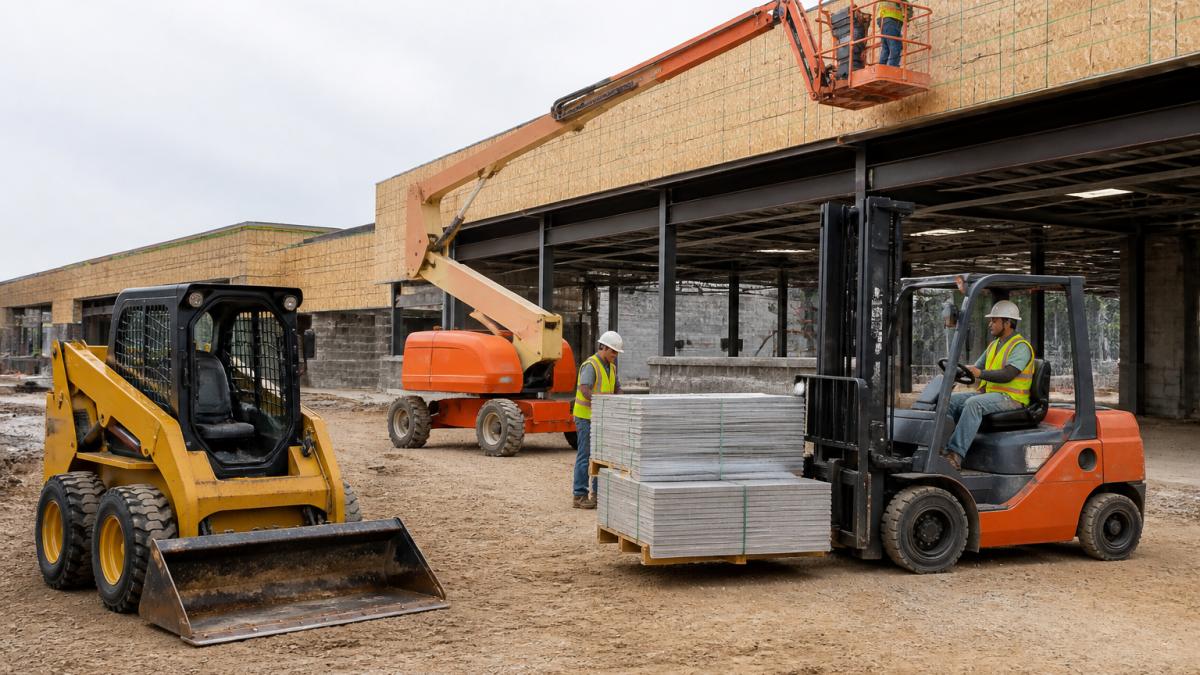
Skid steers are versatile machines for loading, grading, and site cleanup. Daily rates fall between mini excavators and standard excavators. The attachment system lets you swap buckets, forks, or augers without renting multiple machines, often making skid steers cost-effective despite higher daily rates.
Mini skid steers fit tight spaces and residential properties. They rent at lower daily rates than full-size skid steers and handle the same attachments, better value for backyard projects or confined jobsites.
Aerial lifts include boom lifts and scissor lifts. Boom lifts reach higher and farther, so they cost more per day; scissor lifts work for vertical access in confined areas at lower rates.
Forklifts handle material handling on construction sites, warehouses, and industrial facilities. Daily rates depend on lift capacity and mast height. Telehandlers cost more but reach higher and farther than standard forklifts.
Loaders move bulk materials and prepare sites. Wheel loaders cost more per day than skid steers but handle larger volumes. Track loaders work on soft ground where wheel loaders sink. Daily rates reflect these capability differences.
Hidden Costs and Fees Beyond the Base Rental Rate
The base daily or weekly rate is only part of your total cost. On a typical short-term rental, secondary fees can add to the base rate. Here is what actually shows up on the invoice.
| Fee | Typical Amount | When It Applies |
|---|---|---|
| Delivery and pickup | $75-$400 each way, depending on distance and machine size | Most rentals; often waived on multi-week contracts |
| Fuel charge | $30-$150, or a per-gallon surcharge | When equipment is returned below the outbound fuel level |
| Damage waiver | 5-15% of the base rental rate | Optional but commonly elected |
| Cleaning fee | $50-$250 | When equipment is returned with excessive dirt, concrete, or mud |
| Late return | 1.5x the daily rate per day, or a flat penalty | When equipment is returned past the agreed time |
| Operator training / certification | $50-$300 per operator | Required for boom lifts and some other equipment |
| Environmental / fluid fee | $10-$50 | Some yards charge on every rental |
Delivery and pickup fees apply when the rental company transports equipment to your jobsite and retrieves it afterward.
Fuel charges appear on your invoice if you return the equipment with less fuel than it had when rented. Some rental companies charge a fuel surcharge instead.
Damage waivers protect you against repair costs if the equipment is damaged during your rental period. These optional fees add 5-15% to your rental cost but prevent unexpected liability.
Operator training or certification may be required for certain equipment. Boom lifts, for example, often require operator certification under ANSI A92 standards.
Maintenance and service charges apply if you use equipment beyond normal wear. Excessive dirt buildup, hydraulic fluid leaks, or mechanical issues can trigger additional charges.
Administrative fees for late returns, paperwork, or contract modifications add small amounts to your invoice. Read your rental agreement carefully to understand all potential charges, and confirm the late-return policy in writing before you sign.
Using an Equipment Rental Cost Calculator to Budget Accurately
A rental cost calculator simplifies the budgeting process. These tools help you compare options and estimate total project costs.
What a calculator does:
- Compares daily, weekly, and monthly rates for the same equipment
- Shows total cost for your specific rental period
- Factors in delivery fees, fuel, and damage waivers
- Identifies the most cost-effective rental duration
How to use one effectively:
Enter your equipment type and required dates. The calculator shows available options and their costs. Compare the per-day cost across different rental durations. Add secondary fees to get your true total cost.
Limitations to remember:
Calculators use standard rates that may not reflect your specific location or current market conditions. Equipment availability affects pricing. Seasonal demand influences rates. A calculator gives you a starting point, not a final quote.
Best practice:
Use a calculator to understand pricing structure and compare scenarios. Then contact a rental company directly for current rates and availability. For your specific needs, contact us to get accurate pricing.
Getting a Quote and Booking Your Equipment
Once you've calculated your estimated costs and identified your equipment needs, it's time to get a formal quote and secure your rental. Browse our Equipment Rentals to see available options and initiate your booking.
Provide detailed information to the rental company:
- Specific equipment type and size
- Exact rental start and end dates
- Delivery location and jobsite access details
- Any special requirements or attachments needed
- Your project scope and equipment usage plan
Ask clarifying questions:
- What's included in the base rental rate?
- What fees apply beyond the daily or weekly rate?
- Is delivery included or charged separately?
- What's your damage waiver policy?
- What happens if I need the equipment longer than planned?
Review the rental agreement carefully before signing. Confirm all fees, rental duration, equipment condition expectations, and liability terms. Understand your responsibilities for equipment care and return conditions.
Book early for peak seasons. Spring and summer see higher demand for construction equipment. Reserving equipment weeks in advance ensures availability and may offer better rates.
When you're ready to move forward, Contact Us to discuss your project requirements and get a customized quote.
Frequently Asked Questions
Is it cheaper to rent construction equipment by the day, week, or month?
Weekly and monthly rental rates typically offer better value per day than daily rates. For projects lasting more than a few days, moving to weekly pricing reduces your effective daily cost. The longer your rental period, the better the rate becomes.
How much does it cost to rent an excavator per day?
Excavator rental costs depend on machine size and your location. Mini excavators rent at lower daily rates than large excavators. Weekly and monthly rates offer significant discounts compared to daily pricing. Contact a local rental provider for current rates, as pricing varies by equipment availability, delivery distance, and market conditions in your area.
What extra fees should I expect when renting construction equipment?
Beyond the base rental rate, expect delivery and pickup fees, damage waivers or insurance options, fuel charges if you return equipment empty, and fees for specialty attachments. Some providers charge mileage on equipment transport or require deposits. Review the rental agreement carefully to understand all costs before booking. Ask your rental company for a complete cost breakdown upfront.
How do I estimate the total cost of renting equipment for a project?
Start with your project timeline to determine rental duration. Identify each piece of equipment needed and get daily, weekly, or monthly rates from your rental provider. Calculate the base rental cost, then add delivery fees, pickup fees, fuel, insurance, and any specialty attachments. Use this total to set your equipment budget. Many rental companies offer cost calculators on their websites to simplify this process.
Getting construction equipment rental costs right means understanding the full picture: base rates, rental duration options, additional fees, and total project cost. By calculating accurately and planning your rental period strategically, you control expenses and keep your project on budget. The difference between a daily rental and a weekly rental can be substantial, do the math before you commit.