 How-to
How to Dig a French Drain with a Mini Excavator
Last Updated: October 25, 2026
Quick Summary
A mini excavator's maximum digging depth ranges from about 1.5 metres on 1-ton machines to roughly 3.5 metres on 5-ton units, far more than the 0.45 to 0.9 metres a French drain trench needs. For most residential French drains, mini excavator digging is limited by access and bucket width, not depth, so a 1.7 to 3-ton machine is usually the right size.
- A French drain trench is typically 0.3 to 0.6 metres wide and 0.45 to 0.9 metres deep.
- A 1.7 to 3-ton mini excavator fits a standard gate and reaches French drain depth easily.
- Aim for a fall of about 1 in 100, or roughly 10 mm per metre, toward the outlet.
- A mini excavator trenches roughly 15 to 30 metres per hour in ordinary soil.
- Cut a shallow pilot pass first, then check depth and fall before cutting to final grade.
Table of Contents
- Mini Excavator Maximum Digging Depth and French Drain Needs
- French Drain Trench Depth and Width: What the Trench Actually Needs
- Choosing the Mini Excavator Size for French Drain Work
- How Long to Dig a French Drain with a Mini Excavator
- Step-by-Step: Digging the Trench and Setting Depth
- Common Mistakes That Undermine Depth and Drainage
- Rental Costs and What to Confirm Before You Book
- Reserve Your Mini Excavator for the Trench
- Frequently Asked Questions
Mini Excavator Maximum Digging Depth and French Drain Needs
A mini excavator's maximum digging depth runs from about 1.5 metres on the smallest 1-ton class machines to roughly 3.5 metres on a 5-ton unit. A French drain trench almost never needs more than 0.6 to 1.2 metres. That gap matters: it means most French drain jobs are limited by access and bucket width, not by how deep the machine can reach. This guide covers mini excavator digging depth for French drains, from size classes through trench setup, rental costs, and booking.
Dig depth by mini excavator size class
Published maximum dig depth scales with machine class. These are typical manufacturer figures for a standard boom, and they vary by brand and arm configuration:
| Size class | Operating weight | Typical max dig depth | Typical bucket width |
|---|---|---|---|
| 1-1.7 ton | 1,000-1,700 kg | 1.5-2.0 m | 230-300 mm |
| 2-3 ton | 2,000-3,000 kg | 2.0-2.5 m | 300-400 mm |
| 3.5-5 ton | 3,500-5,000 kg | 2.8-3.5 m | 400-600 mm |
Why published max depth is not the depth you can trench
Max dig depth is measured with the arm fully extended and the bucket curled, in ideal ground. You lose depth in practice for four reasons:
- Flat bucket angle. A level trench bottom needs the bucket flat, which costs you reach.
- Spoil clearance. You need room to swing and dump without the tail hitting a fence or wall.
- Ground conditions. Roots, rock, and hardpan stop the bucket before the machine runs out of reach.
For a French drain, this is good news. You have depth to spare on every class above 1 ton.
French Drain Trench Depth and Width: What the Trench Actually Needs
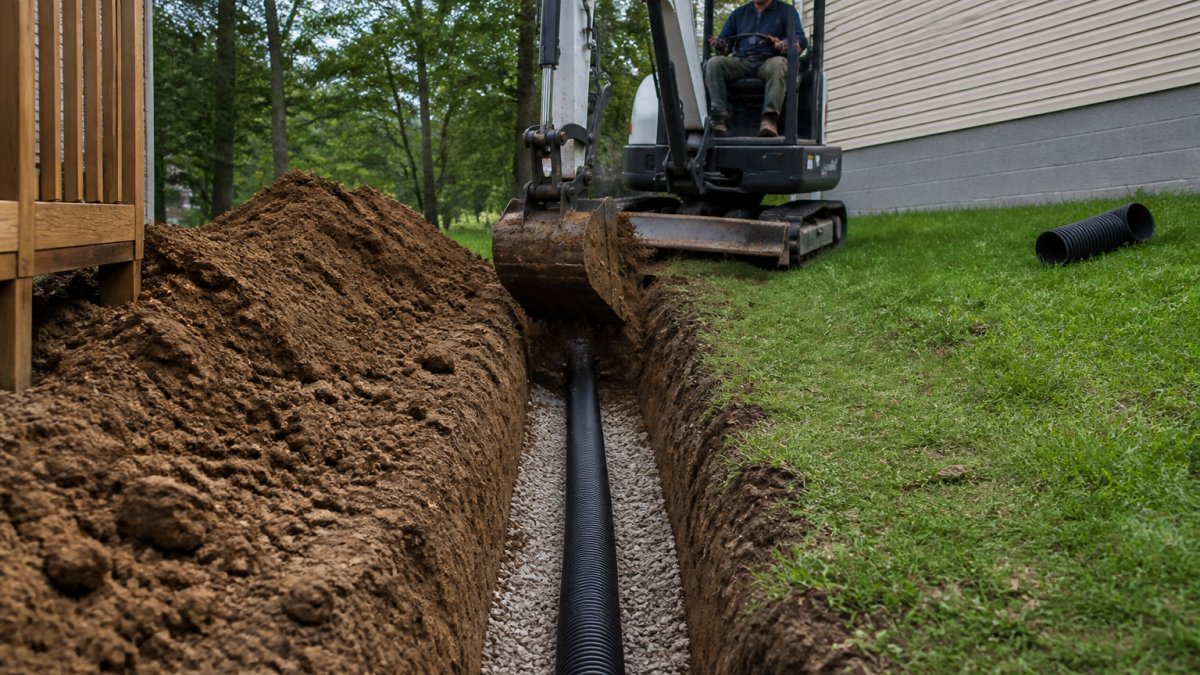
A French drain trench is typically 0.3 to 0.6 metres wide and 0.45 to 0.9 metres deep, with the pipe sitting on a bed of washed gravel and filter fabric lining the sides. Depth depends on what you are draining and where the water goes, not on the machine. The trench must be deep enough to intercept water before it reaches the problem area and to hold a fall toward the outlet. Width comes from your pipe and gravel: a 100 mm pipe inside a fabric-wrapped gravel envelope needs roughly 300 mm of trench, and a 150 mm pipe or a double-wall system needs more.
Depth, width, and slope in practice
Three numbers decide whether the drain works:
- Depth: set by the water table, footing depth, or the low point you are relieving.
- Width: pipe diameter plus gravel on both sides, usually 300-450 mm.
- Slope: a fall of about 1 in 100, or roughly 10 mm per metre, keeps water moving.
Slope is where most DIY trenches fail. A mini excavator with a laser receiver or a grade rod lets you check fall as you cut. Without one, you are guessing.
Choosing the Mini Excavator Size for French Drain Work
For most residential French drains, a 1.7 to 3-ton mini excavator is the right size: it reaches the 0.6 to 0.9 metre depth easily, fits through a standard gate, and carries a bucket narrow enough to cut a clean trench. Go smaller only when access is tight. Go bigger only when the run is long or the ground is heavy. The decision comes down to three measured trade-offs, not a spec-sheet maximum.
Machine weight, bucket width, and access
Match three things to the job, and measure each one before you call for a rental:
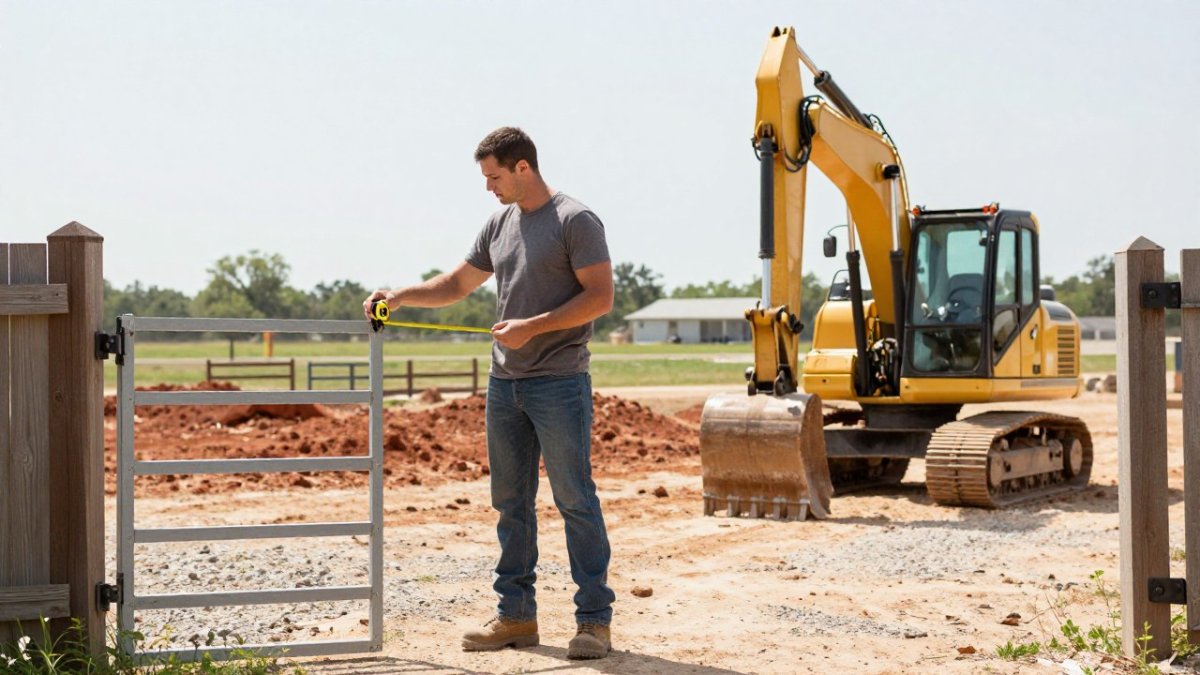
- Gate and path width. Measure the narrowest point with a tape, then subtract at least 100 mm clearance on each side. A 1.7-ton machine is typically about 980-1,100 mm wide with the tracks retracted; a 3-ton machine is often 1,500-1,600 mm wide. If your gate is 900 mm, you are in 1-ton territory regardless of depth.
- Bucket width. A 300 mm bucket suits most residential pipe and gravel. A wider bucket speeds long runs but moves more spoil. As a rule of thumb, a 300 mm bucket on a 0.6 m deep, 30 m run displaces roughly 5.4 cubic metres of spoil; a 450 mm bucket on the same run displaces about 8.1 cubic metres. That extra 2.7 cubic metres has to go somewhere, and hauling it away is often the hidden cost of a wider bucket.
- Tail swing. Zero-tail machines work better against fences and foundations. A conventional-tail 3-ton machine can swing roughly 1.5 m past its tracks; if your trench runs within that arc of a wall, either switch to a zero-tail model or plan to reposition constantly.
The sizing trade-off in practice
A common pattern is that homeowners over-buy on depth and under-buy on access. A 3.5-ton machine that reaches 3.2 m is useless if it cannot pass the side yard. Work backward from the constraint:
- Measure the narrowest access point. That sets your maximum machine width.
- Measure the trench run and target depth. That sets your minimum reach and bucket size.
- Check the spoil plan. A longer or wider trench means more material to move; confirm you have a place to pile it or a plan to haul it.
- Confirm the outlet elevation. If the outlet is shallow, a smaller machine with a shorter reach may still be the right call because you cannot dig deeper than the outlet allows.
If you want to go deeper on matching a machine to a backyard drainage project, read our guide on mini excavator rental for backyard drainage. Once you know your size class, you can browse the equipment rentals we keep ready to book.
How Long to Dig a French Drain with a Mini Excavator
A mini excavator digs a residential French drain trench at roughly 15 to 30 metres per hour in ordinary soil, so a 30-metre run takes about one to two hours of machine time. Add time for layout, spoil handling, and cleanup. A common mistake is budgeting only for digging.
Realistic timing for a 30-metre residential drain:
- Layout and marking: 30-45 minutes
- Machine setup and access: 20-30 minutes
- Trenching: 1-2 hours
That puts a small job at roughly half a day to a full day, and a full day is the sensible rental window.
Step-by-Step: Digging the Trench and Setting Depth
Dig a French drain trench by marking the line and slope first, cutting a shallow pilot pass, then checking depth and fall every few metres before cutting to final grade.
- Mark the line and outlet. Use stakes and string, and confirm the outlet is lower than the start.
- Set your target depth. Mark it on a grade rod or set a laser receiver.
- Cut a pilot pass. Take the top 150-200 mm along the full run.
- Check fall. Measure depth at each stake before going deeper.
- Cut to final grade. Work in passes, checking as you go.
- Square the bottom. A flat, even trench bottom lets gravel and pipe sit true.
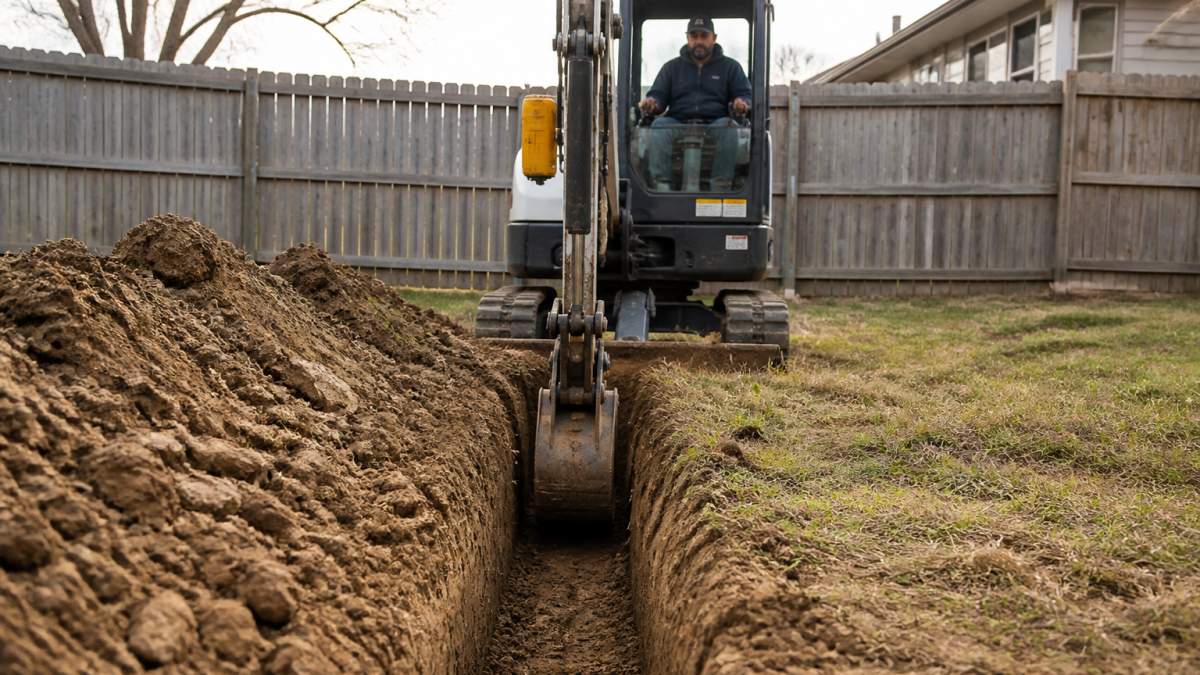
Watch out: cutting the full depth in one pass on a slope almost always produces a trench that holds water. Cut shallow, check, then finish.
Common Mistakes That Undermine Depth and Drainage
The failures we see most often are not machine problems. They are setup problems:
- Digging too deep for the outlet. If the outlet is not lower, the drain holds water.
- Cutting a wavy bottom. Gravel settles unevenly and the pipe sags.
- Skipping filter fabric. Silt clogs the gravel and the drain stops working.
Rental Costs and What to Confirm Before You Book
Mini excavator rental pricing depends on machine size, rental period, delivery distance, and attachments, so we quote each job rather than publish a flat rate. That said, you can budget realistically if you understand how the invoice is built. Pricing for mini excavator rentals varies based on machine size, rental period, delivery distance, and attachments. Treat these as planning ranges, not quotes, and confirm current rates when you call.
What the base rate does not include
The machine rate is only part of the invoice. A transparent budget accounts for:
- Delivery and pickup. Often $100-$300 each way depending on distance; some shops include it within a radius, many do not.
- Fuel. Some rentals come full and must be returned full; others bill fuel after the fact. Ask which.
- Damage waiver. Commonly 10-15% of the rental rate, and often optional but hard to decline on a jobsite.
How rental duration changes the effective daily price
The daily rate is not the number to optimize. Compare the effective daily cost across terms:
- A $300 daily rate on a one-day rental is $300 per day.
- A $950 weekly rate spread over seven days is about $136 per day.
- A $2,400 four-week rate spread over 28 days is about $86 per day.
A common pattern is that a job budgeted as a one-day rental stretches to two days because of gravel, fabric, and backfill. If you suspect that will happen, price the weekly rate before you commit to daily; the break-even is often around three days. Extending a rental mid-term is usually more expensive than booking the longer term up front, so ask about the extension rate when you reserve.
A simple cost-calculation method
To turn a project into a budget, use this sequence:
- Estimate machine days. Trenching at 15-30 metres per hour plus setup, gravel, pipe, and backfill usually lands a 30-metre residential drain at one to two machine days.
- Pick the shortest rental term that covers those days. If two days, compare two daily rates against one weekly rate.
- Add delivery and pickup. Get the number before you book; it can swing the decision between a nearby shop and a cheaper distant one.
- Add the damage waiver and attachments. A second bucket or a breaker changes the total.
- Add tax and any environmental fee.
- Compare the total against buying or hiring a laborer. For a one-off residential drain, renting almost always wins; the break-even for buying a used 1.7-ton machine typically sits well beyond a single project once you account for transport, maintenance, storage, and financing.
What you should confirm before booking:
- Rental period. Daily, weekly, and four-week rates change the effective daily cost.
- Delivery and pickup fees. These are often separate from the machine rate.
- Fuel and damage waiver. Ask what is included and what is billed after.
For quick answers on rental terms, depth, and access, check our FAQs. Rates are quoted per job, so confirm current pricing when you call.
Reserve Your Mini Excavator for the Trench
The right machine for a French drain is usually smaller than people expect and reaches deeper than the trench needs. Get the size class and bucket width right, cut a pilot pass, check your fall, and the rest is straightforward. Hoke Rentals provides reliable, well-maintained equipment rentals for contractors, businesses, property owners, and DIY customers throughout East Texas.
To reserve a machine, contact us with your trench length, target depth, and access width.
Frequently Asked Questions
Can a mini excavator dig deep enough for a French drain?
Yes, for most residential French drains. A typical trench is 18 to 24 inches deep and 12 to 18 inches wide. A 1- to 2-ton mini excavator with a maximum digging depth of 5 to 7 feet can reach that easily. For deeper trenches or long runs, a 3- to 4-ton machine gives more reach and stability. Confirm the machine's maximum digging depth and the bucket width you need before you book.
What size mini excavator is best for digging a French drain?
Match the machine to the trench and the access. A 1- to 2-ton unit with a 12- to 16-inch bucket works for most residential trenches and fits through a 36- to 48-inch gate. Choose a 3- to 4-ton machine for longer runs, heavier soil, or trenches deeper than 30 inches. The mini excavator size for French drain work should leave enough depth margin so you are not maxing out the boom at finished grade.
How long does it take to dig a French drain with a mini excavator?
A 100-foot residential trench in normal soil typically takes 2 to 4 hours with a mini excavator, including positioning and cleanup. Rocky soil, tight access, or a deeper trench can double that. Add time for laying fabric, gravel, and pipe. For planning, estimate 1.5 to 3 hours per 100 feet of trench, then add a buffer for site conditions.
How much does it cost to rent a mini excavator?
Rates depend on machine size, rental period, delivery distance, and attachments. Most rental companies quote a daily, weekly, and four-week rate, plus delivery and pickup fees. Hoke Rentals does not publish fixed prices because the total depends on your project. Contact Hoke Rentals with your trench length, depth, and access details for a current quote.
Digging a French drain is a half-day job when the machine fits the trench and a frustrating two days when it does not. We would rather help you pick the right size class up front than have you fight a machine that cannot get through the gate. Get started with Hoke Rentals and reserve a mini excavator matched to your trench depth, width, and access.